Introduction
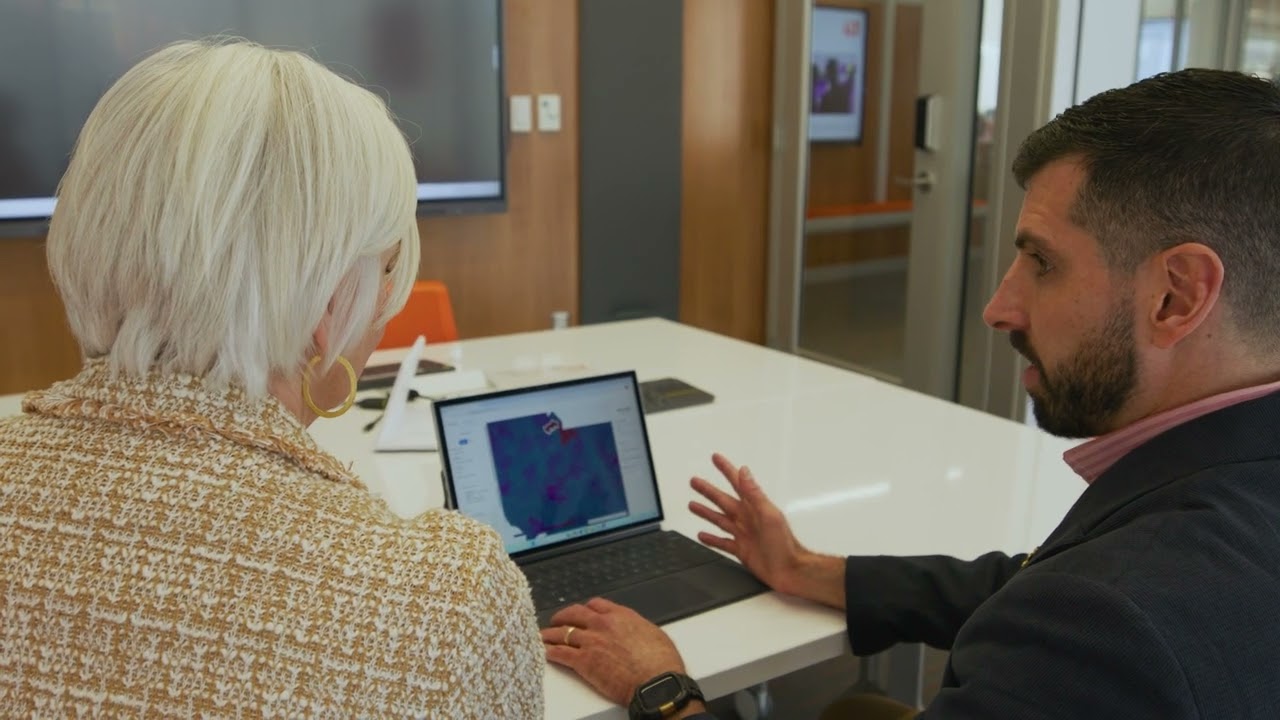
Meet DMA-PRIME
Hear directly from our team about how we are building South Carolina’s outbreak detection and response network.
DMA-PRIME increases the ability of public health organizations and communities to prepare for, and respond to, infectious disease threats through a statewide network for outbreak detection, forecasting, and emergency response.
Hear directly from our team about how we are building South Carolina’s outbreak detection and response network.
Dr. Lior Rennert joins Dr. Dylan George (CDC Center for Forecasting & Outbreak Analytics) and host Dr. Mati Hlatshwayo Davis on IDSA’s Let’s Talk ID podcast to discuss how data science, AI, community partnerships, and non-traditional data sources are transforming outbreak forecasting and response across South Carolina and the nation.
DMA-PRIME is a CDC Center for Forecasting and Outbreak Analytics (CFA) Insight Net Center housed at Clemson University's Center for Public Health Modeling and Response. As one of 13 Insight Net Centers nationwide, we lead South Carolina's effort to build a state-of-the-art, data-driven outbreak detection and response network.
Through collaboration with state, tribal, local, and territorial partners and health-care decision-makers, we obtain real-time data from electronic health records (EHR), wastewater samples, and digital trace data to develop local-level modeling frameworks integrated into analytic software used by real-world health departments in South Carolina and beyond.
As an Insight Net Integrator, Clemson works with public health decision makers to test the utility of disease modeling tools — refining analytic approaches, supporting response-ready data collection, and evaluating integration processes and outcomes.
To save lives by increasing the ability of public health organizations and communities to prepare for and respond to infectious disease outbreaks through a multi-pronged approach: procurement and integration of informative data into proven forecasting and analytic tools; integration of those tools into decision-support toolkits; and enhancement of methods for communicating analytic results to decision makers and communities.
Real-time surveillance integrating EHR data, wastewater samples, and digital trace data to detect and forecast emerging threats across 30+ pathogens.
Software actively used by SC’s Department of Public Health, Prisma Health, MUSC, and SC schools to track outbreaks and guide emergency response.
Informing field-level interventions, healthcare system disaster planning, and community awareness of healthcare service availability.
Developing tools to detect unknown and novel pathogens before they spread, supporting both public health response and national biosecurity objectives.
Our multidisciplinary team develops and applies cutting-edge data-driven methods across five interconnected research domains, from granular disease forecasting to community-centered intervention strategies.
We develop and validate machine learning and statistical modeling frameworks for real-time, fine-grained forecasting of respiratory virus activity — including influenza, COVID-19, and RSV — at the ZIP code and county level using local health system electronic health records. Our approaches enable public health decision makers to anticipate surges before they occur, allocate resources proactively, and tailor interventions to the communities of greatest need.
We develop spatial and ecological modeling frameworks to identify ZIP code-level predictors of infectious disease burden and drug-related hospitalizations across the United States. By integrating community-level contextual factors with health system data, our models support targeted intervention delivery — informing where resources such as treatment services, testing, and outreach are most urgently needed to reduce health disparities.
We build statistical and geospatial frameworks to guide the strategic scheduling and prioritization of mobile health clinics (MHCs) to communities with the greatest unmet need. Our work spans MHC utilization for hepatitis C screening and treatment, COVID-19 vaccination, opioid use disorder services, and chronic disease management in rural South Carolina — informing decision makers on where and when to deploy limited resources for maximum public health impact.
We conduct real-world evaluations of vaccine effectiveness against severe respiratory illness using large-scale electronic health record data from South Carolina’s major health systems. Leveraging causal inference methods and target trial emulation, our work provides timely estimates of protection conferred by COVID-19 and other vaccines — informing vaccination policy and public health guidance at the state and national level.
We develop integrative epidemiological modeling toolkits to inform institutional-level outbreak response, resource allocation, and mitigation strategy evaluation. Developed and validated at Clemson University during the COVID-19 pandemic, these frameworks integrate surveillance data with contextual factors to support decision making across universities, health systems, and other institutional settings — providing a generalizable infrastructure for future infectious disease emergencies.
A multidisciplinary team from Clemson’s Center for Public Health Modeling and Response, spanning biostatistics, epidemiology, environmental engineering, communication science, bioengineering, and data science.
Press coverage, podcasts, and partner stories featuring DMA-PRIME research and its public health impact across South Carolina and beyond.
Directed by Dr. Lior Rennert, the program embeds Clemson faculty within the South Carolina Department of Public Health to strengthen real-world collaboration on statewide public health challenges. The initiative places researchers from DMA-PRIME at the intersection of academic modeling and operational decision-making — allowing outbreak analytics tools to be developed, tested, and refined directly within the public health agencies that use them. Faculty Dr. Brian Witrick and Dr. Erin Ash are among the inaugural embedded scholars.
Read the full story →MUSC highlights the DMA-PRIME initiative and the vision of using data-driven analytics to forecast infectious disease outbreaks with the same precision as weather prediction.
Read more →Clemson announces the launch of DMA-PRIME, one of 13 CDC Insight Net centers nationwide, dedicated to advancing infectious disease forecasting and public health decision-support tools across South Carolina.
Read more →Furman University profiles the role of its Institute for the Advancement of Community Health and Dr. Kerry Sease in DMA-PRIME’s statewide outbreak preparedness and response network.
Read more →USC’s Arnold School of Public Health highlights its role leading DMA-PRIME’s wastewater surveillance core, building a statewide network to detect infectious agents in real time.
Read more →Dr. Rennert joins CDC’s Dylan George and host Dr. Mati Hlatshwayo Davis to discuss how AI, community partnerships, and non-traditional data are transforming outbreak forecasting and response.
Listen →Clemson News covers Dr. Rennert’s IDSA podcast appearance discussing DMA-PRIME’s analytic frameworks, AI applications, and community partnerships driving improved health outcomes statewide.
Read more →Dr. Rennert provides expert commentary on the Spartanburg County measles outbreak, discussing DMA-PRIME disease models and the critical role of contact tracing and vaccination in containing spread.
Read more →Whether you are a researcher, public health department, health system, community organization, or prospective study participant — we would love to hear from you.